
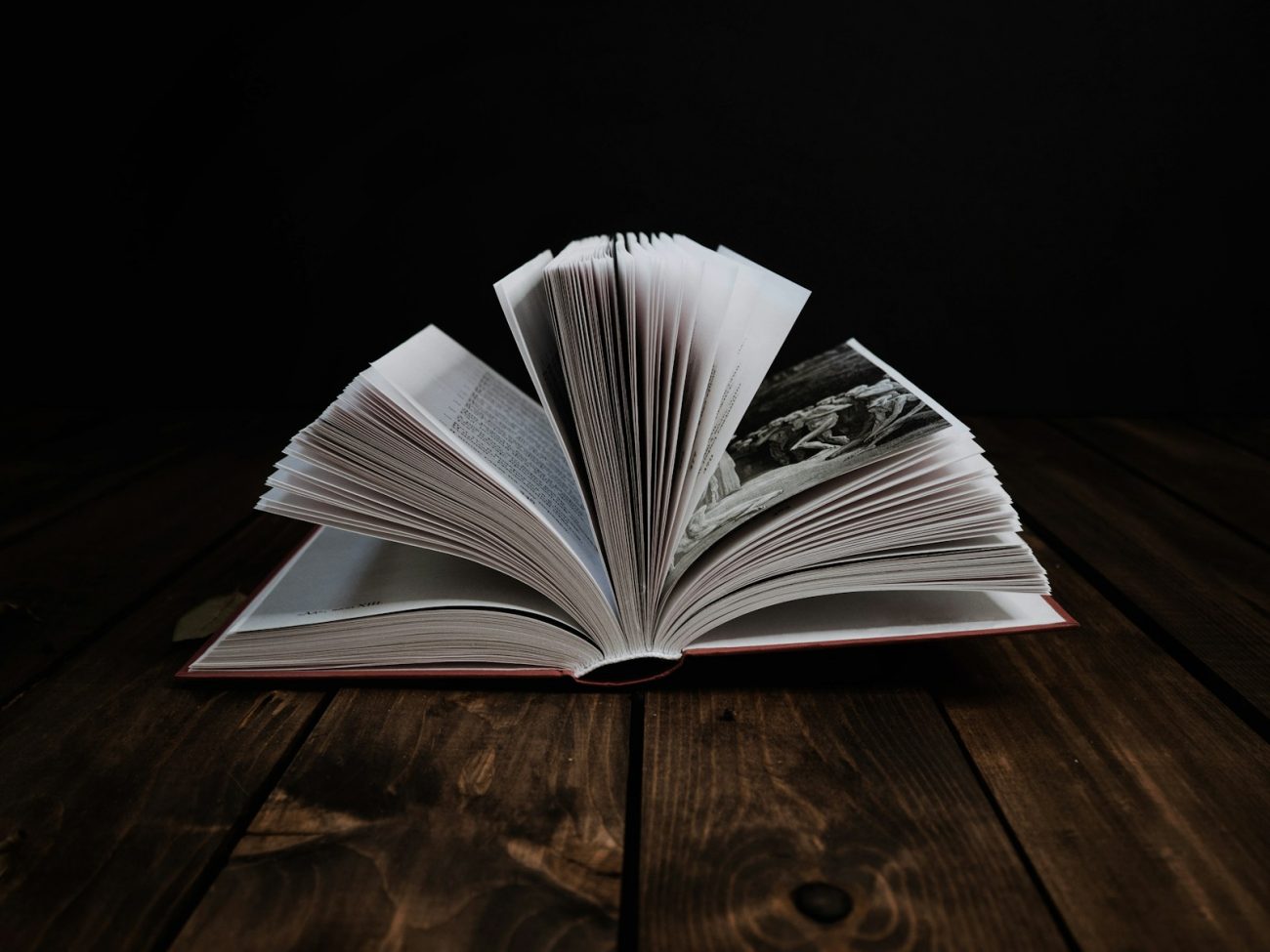
Robert Frost’s much-quoted line that « poetry is what gets lost in translation » has been the unfortunate slogan of a field he probably did not understand well. The translators I admire most have largely ignored him. Don Mee Choi’s translations of Kim Hyesoon, Anne Carson’s Sappho, Lydia Davis’s Proust, Edith Grossman’s Cervantes — these are not the documentary residues of failed translation. They are themselves works of literature, sometimes equal in achievement to the originals. The question is not whether poetry survives translation, but how well a particular translator listens to a particular poem in two languages at once.
This piece looks at what literary translation of poetry actually involves as a craft, the long-running debate between literal and literary modes, the rise of the bilingual edition as a default format, and which contemporary translators are doing the most interesting work. The tone is practical rather than theoretical: I am interested in how translators read, draft, revise and decide.
What translators actually do
The popular image of translation — find the equivalent word, then the next word, then assemble — describes about five percent of how working literary translators operate. The actual process, as described by translators including Susan Bernofsky, Aaron Coleman, Jen Calleja and Sasha Dugdale, is closer to a multi-stage interpretive task. The translator first reads the poem dozens of times in the source language, often aloud, until the rhythm, lineation and tonal register become available as felt knowledge rather than analytic knowledge. They then draft an initial version, usually quite literal, that captures the semantic content. Then begins the long phase of revision, where the translator negotiates between the source poem’s sound and the target language’s resources.
The negotiation is genuinely difficult. English has no direct equivalent for the German participle phrase, the French passé simple, the Korean honorific structure, the Arabic root system, or the Russian aspect distinction in verbs. Each of these grammatical features carries semantic weight in poetry. The translator’s job is to recover, in the target language, what the source feature was doing — not to copy the form but to perform the function.
Literal versus literary: a long-running argument
The two extreme positions in translation theory are easily caricatured. The literal school, associated historically with Vladimir Nabokov’s notorious 1964 four-volume Eugene Onegin, prioritises semantic accuracy at almost any cost to poetic effect. Nabokov was openly hostile to verse translations that preserved Pushkin’s iambic tetrameter and rhyme scheme; he believed the result was inevitably a mistranslation of meaning. The literary school, associated with Robert Lowell’s Imitations (1961), prioritises poetic effect even at the cost of literal accuracy, sometimes producing what is essentially a new poem in the manner of the original.
Most working translators today operate between these poles. The dominant mode in serious literary translation since the 1990s has been what Edith Grossman called « faithful but not slavish »: close to the semantic content of the original, but unwilling to sacrifice the target-language poem’s musicality. The bilingual edition, with the original on the facing page, has reduced the stakes of the literal/literary debate by allowing the reader to compare directly.
Sound: the hardest thing to carry across
The single most difficult element to preserve in translation is sound texture. Rhyme, meter, alliteration, assonance, vowel music — these are intrinsically tied to the source language’s phonological system, and rarely transfer directly. The translator typically has to choose: preserve the literal meaning and lose the sound, or recreate analogous sound effects at the cost of strict semantic equivalence.
Anne Carson’s translations of Sappho in If Not, Winter (2002) take an extreme literal approach to the surviving fragments, using square brackets where the papyrus is damaged, refusing to fill gaps with conjecture. The result is austere and strange. By contrast, Mary Barnard’s mid-century translations had completed the fragments imaginatively, producing a more readable but less faithful book. Both versions are valuable; they answer different questions about what the translation should do.
Don Mee Choi and the politics of translation
Don Mee Choi’s work translating Kim Hyesoon — recognised with multiple major awards including the National Book Award for Translated Literature — represents one of the most theoretically articulate practices in current English-language translation. Choi has written extensively about translation as a politicised act, particularly in the context of Korean poetry and the legacy of Japanese colonialism. Her translations preserve syntactic strangeness rather than smoothing it into idiomatic English, on the principle that smoothing would erase the cultural and historical specificity of the source.
The economic reality of literary translation
Literary translation in 2026 remains poorly paid. The PEN America Translation Committee’s most recent rates survey, in 2023, found median per-word rates between 0.10 and 0.15 dollars for literary prose, and slightly higher per-line rates for poetry. A full-length poetry collection translation might pay between 3,000 and 8,000 dollars total, often spread over a year or more of work. Translators usually receive modest royalty splits — typically 1 to 2 percent of cover price — though several recent contracts pioneered by the Authors Guild and PEN have moved toward more equitable splits.
Funding from translation grants partially closes the gap. PEN/Heim Translation Fund, the National Endowment for the Arts Translation Fellowships, and European-side grants from English PEN, the Goethe Institut and the Centre national du livre in France collectively support several hundred translation projects per year.

The rise of the bilingual edition
For nearly a century, English-language poetry translation was published primarily in monolingual editions. The shift toward bilingual presentation, with source and target on facing pages, accelerated in the 1990s and is now standard practice at most serious poetry presses. Copper Canyon Press, NYRB, Archipelago Books, Action Books, Ugly Duckling Presse, Carcanet and Bloodaxe in the UK, and Editions du Seuil in France all default to bilingual presentation for major poetry projects.
The bilingual format has changed how translators work. Knowing the reader can see the original means the translator does not have to compensate for invisibility; instead they can offer their version as one possible reading, in conversation with the source rather than in place of it.
Contemporary translators worth following
The current generation of literary translators operating in English is unusually strong. A short list of working practitioners producing consistently excellent volumes of poetry translation:
- Don Mee Choi: Korean to English, particularly Kim Hyesoon
- Jamie McKendrick: Italian to English, Valerio Magrelli, Antonella Anedda
- Sasha Dugdale: Russian to English, Maria Stepanova, Yelena Shvarts
- Karen Emmerich: modern Greek, Yannis Ritsos and others
- Robin Myers: Spanish to English, Latin American poets
- Forrest Gander: Spanish, particularly Pura López-Colomé and Coral Bracho
- Daniel Mendelsohn: Greek classical poetry
- Aaron Coleman: Spanish-language Caribbean poetry
- Jennifer Croft: Polish to English, primarily for prose but with poetry projects ongoing
Why translation matters for monolingual readers
The case for reading translated poetry, for readers who do not work in any second language, is more practical than ideological. Most of the world’s significant poetry is being written outside English. The Korean poetry boom of the past decade, the resurgence of Latin American poets in translation, the gradually expanding access to Arabic and South Asian traditions, and the post-Soviet poetry of the former Eastern bloc are all happening in English only through translators. A monolingual reader who limits themselves to anglophone poetry is reading a fraction of the contemporary global field.
The Frost line — that poetry is what gets lost — was wrong precisely because it underestimated translators. What is true is that translation is interpretation, and reading a translated poem means reading a collaboration between two writers. That is sometimes a richer object than a single-authored poem, not a poorer one.
Frequently asked questions
Should I read multiple translations of the same poem?
For canonical works, yes. Reading three translations of Sappho, or of Rilke’s Duino Elegies, exposes choices that a single translation conceals. Each translator’s version becomes itself a critical reading.
Are machine translations now usable for poetry?
For literal first drafts, sometimes. For final versions, no. The current generation of large language models can produce surprisingly readable rough translations, but consistently miss tonal register, sound texture and cultural specificity in ways that an experienced human translator catches. Several translators use AI tools as starting points for very rough drafts, then revise extensively.
How do I evaluate a translation if I don’t know the source language?
Read multiple translations side by side, read the translator’s introduction (which usually flags the choices made), and trust your ear in the target language. A translation that reads well in the target language is not always faithful, but a translation that reads badly is rarely a sign that the original was bad.
The institutional support for translation
The infrastructure supporting literary translation has expanded substantially over the past two decades. The European Society for Translation Studies, founded in 1992, now coordinates academic research across more than 40 countries. The American Literary Translators Association runs annual conferences and publishes the journal Translation Review. The British Centre for Literary Translation at the University of East Anglia has produced several generations of working literary translators through its summer school and degree programmes.
Several specific funding programmes deserve attention. The Arts and Humanities Research Council in the UK funds substantial translation research alongside individual translator grants. The European Union’s Creative Europe programme supports translation projects across member states. The Goethe-Institut, Institut français and similar national cultural agencies fund translation of their respective national literatures into other languages.
The translator’s drafting workflow, in detail
Most working poetry translators describe a multi-pass process that, viewed from outside, looks closer to musical composition than to rendering. Susan Bernofsky has written about her own method as roughly seven distinct passes through a poem. The first pass produces a near-literal English version with multiple alternatives noted in brackets for any word with disputed semantic range. The second pass returns to the source language and re-reads aloud, marking the rhythm and any sound features (alliteration, vowel patterns, internal rhyme) that feel structural rather than incidental.
The third pass attempts a first English version that responds to the marked sound features, even at the cost of literal accuracy. The fourth pass returns to the source for a « betrayal audit »: every place where the working English version has departed from the literal meaning is examined, and the translator decides whether the departure earned its keep. The fifth pass is line-break and stanza-shape work, where the visual architecture of the poem is rebuilt in English. The sixth and seventh passes are progressive polish, often with a long pause between them so that the translator returns with fresh ears.
The total time per poem varies enormously. A short lyric of 12 lines might require 4 to 8 hours across all passes. A longer narrative poem of 80 lines might require 25 to 40 hours. Translators of the standard a major poetry collection tend to spend 200 to 600 hours on a 80- to 100-page volume, which the per-page payment rates above demonstrably do not compensate at any reasonable hourly rate.
Comparative analysis: three translations of one Rilke line
To make the abstract concrete, consider one famous line from the first of Rilke’s Duino Elegies: « Wer, wenn ich schriee, hörte mich denn aus der Engel Ordnungen? » Stephen Mitchell’s 1982 version reads: « Who, if I cried out, would hear me among the angels’ hierarchies? » Edward Snow’s 2009 version reads: « Who, if I cried out, would hear me from the orders of angels? » The Galway Kinnell and Hannah Liebmann 1999 version reads: « Who, if I called out, would hear me among the orders of angels? »
The differences are small but consequential. Mitchell’s « hierarchies » is closer to the Latin-derived theological term, which Anglophone readers may parse more easily but which loses the German root meaning of « Ordnungen » as ordered ranks. Snow’s « orders » preserves the etymological link but loses some of the celestial register. Kinnell’s « called out » softens « schriee, » which in German carries a sense of involuntary cry rather than deliberate calling. None of these versions is wrong; each negotiates a different trade-off, and an attentive reader who can compare all three understands the original poem better than a reader who has access to only one.
Misconceptions about translation
Several common assumptions about poetry translation deserve correction. The first is that bilingual translators have inherent advantages over monolingual ones. The data does not support the claim. Some of the strongest English-language translators of the past forty years — including Edith Grossman of Spanish and Forrest Gander of Spanish — work primarily in their second language but read it with such practiced depth that the question of native fluency becomes secondary. What matters is reading capacity in the source language, writing capacity in the target language, and an unusual patience with revision.
The second misconception is that translation is a step downward from « original » writing. The economics of book publishing and the hierarchies of literary prestige reinforce this assumption, but the work itself is at least as demanding as original composition. Anne Carson’s translation work has been widely treated as substantively co-equal with her original poetry, and her two roles inform each other. Lydia Davis has been clear that her translation work taught her more about prose composition than any other practice.
The third misconception is that AI-assisted translation will soon replace human literary translators. Machine translation has improved substantially since the introduction of large language models and is now reasonable for first-draft semantic work, but it consistently fails on the elements that matter most in poetry: tone, register, cultural specificity, sound texture and the kind of strategic ambiguity that a poem may deliberately preserve. The American Literary Translators Association has tracked the issue closely since 2023 and found no examples to date of machine-only literary translations winning major translation awards.
Implementation steps for new readers of translated poetry
For monolingual readers who want to read more translated poetry seriously, the practical sequence below works reasonably well across most languages and traditions.
- Start with one well-anthologised poet in good translation. Begin with a single bilingual edition of a poet whose work has been widely re-translated, so that you have multiple versions available for comparison. Rilke, Akhmatova, Lorca, Neruda, Cavafy and Szymborska all qualify.
- Read translator introductions. A serious translator’s introduction usually explains the choices made and the difficulties encountered. The introduction is itself a piece of literary criticism.
- Compare two versions. Buy or borrow a second translation of the same poet and read fifteen poems in both. The points of difference reveal the translator’s interpretive judgments.
- Follow translators across projects. A translator whose work you trust on one poet is likely to produce strong work on others. Don Mee Choi, Jen Calleja, Damion Searls and Karen Emmerich are all worth following across projects.
- Read translation journals. Asymptote, Words Without Borders and the Poetry Society’s Modern Poetry in Translation publish translator interviews and process notes that deepen any reader’s relationship to the field.
Further reading
The Wikipedia entry on literary translation sketches the field’s history. The Poetry Foundation publishes substantial translation features and translator interviews. The PEN America Translation Committee maintains contract templates, model rates and a list of active translation grants for both translators and small presses. Our archive on poetry is filed at poésie moderne, with broader literary criticism at critiques littéraires, and a separate thread on literary translation tracks specific bilingual editions worth reading.
This article is for informational purposes and reflects publicly available translator interviews and craft writing; perspectives on translation theory vary widely, and individual readers should explore multiple translations to form their own judgments.
