
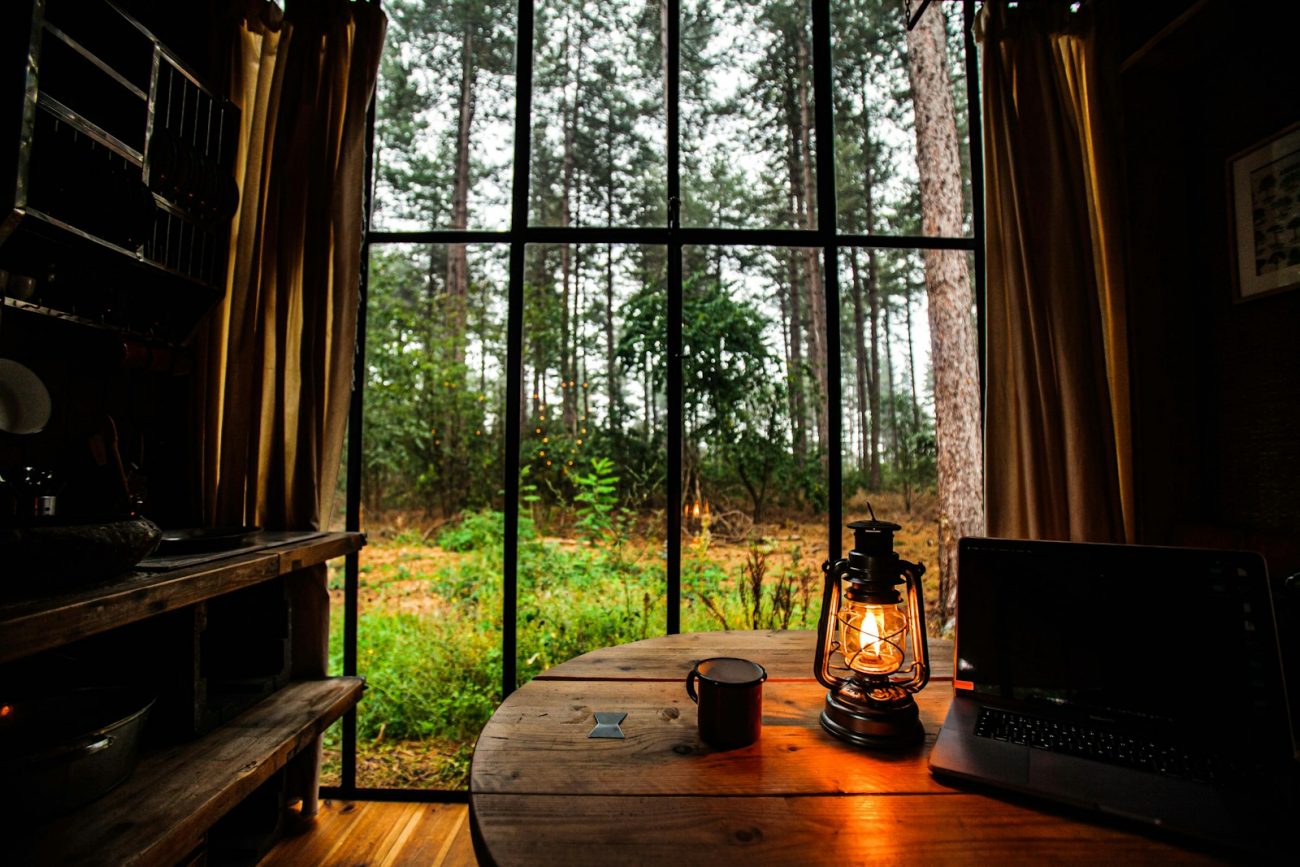
The first writing residency I attended, in a converted farmhouse in the Camargue, was an exercise in productive disorientation. There were six of us, a shared kitchen, three weeks of unstructured time and a stipulation that we eat dinner together every evening. I produced fifty pages of bad poetry and one short essay that became the spine of my next book. The pages were, in retrospect, almost beside the point. What the residency provided was a temporary suspension of the routines that, back at home, had quietly hardened into obstacles.
This guide covers the residencies worth applying to as a writer in 2026, the realistic differences between funded and self-funded programmes, the structural traps in application essays, and what residency life actually feels like once you arrive. Most of the institutions named below have been operating for decades and publish their selection criteria openly, so the application process can be approached as a craft rather than a lottery.
What a residency actually is
A writing residency, at minimum, provides a writer with time, space and removal from daily obligation. The best programmes also provide a stipend, food, healthcare during the stay, and a community of other working writers and artists. The worst — usually the privately operated, self-funded variants — provide a room and not much else, sometimes at substantial cost.
The serious residencies in the English-language tradition began in the early twentieth century with MacDowell (founded 1907) and Yaddo (founded 1900), both in the United States. Europe followed slowly: Hawthornden Castle in Scotland (1982), Civitella Ranieri in Umbria (1995), Bogliasco on the Ligurian coast (1991). Several major residencies require nominations rather than open applications, which has historically narrowed access. That picture has been changing in the past decade as several younger programmes have prioritised open application rounds.
The fully funded residencies worth knowing
Fully funded residencies cover the writer’s costs, sometimes with an additional honorarium. The application process is competitive — typical acceptance rates run from 3 to 8 percent — but for accepted writers the financial implication is significant. The most established programmes:
- MacDowell (New Hampshire, USA): probably the most prestigious in the English-speaking world. 32-day residencies with private studio, all meals, optional childcare. Acceptance rate around 5 percent.
- Yaddo (Saratoga Springs, USA): comparable to MacDowell in selectivity, with stays from two to eight weeks. The list of past residents includes James Baldwin, Sylvia Plath, Jonathan Franzen.
- Civitella Ranieri (Umbria, Italy): six-week stays in a fifteenth-century castle, fully funded with travel stipend. Selection by international juries every two years.
- Hawthornden Castle (Scotland): four-week residencies in a seventeenth-century castle south of Edinburgh. Fully funded, open application.
- Bogliasco Foundation (Liguria, Italy): one-month stays for writers, composers and artists, all costs covered including travel.
- Bellagio Center (Lake Como, Italy, run by the Rockefeller Foundation): four-week residencies, focused on policy-relevant practice.
- The American Academy in Rome (Italy): the Rome Prize, an eleven-month residency with substantial stipend, primarily for academics and creative writers working on Italian themes.
The mid-tier and shorter European residencies
Several less famous European residencies offer substantial time without the extreme competition of the global flagships. They are often more accessible to mid-career writers and to writers working in languages other than English.
- Centre Intermondes (La Rochelle, France): one to three months with a stipend, primarily for writers working on Atlantic and post-colonial themes.
- Villa Sträuli (Winterthur, Switzerland): three-month residencies for translators and writers, fully funded.
- Casa Wabi (Oaxaca, Mexico): one-month residencies in an Tadao Ando-designed compound, available to international writers.
- Akademie Schloss Solitude (Stuttgart, Germany): six to twelve month fellowships for writers under 35, with stipend and accommodation.
- Ledig House (Hudson Valley, USA, programme of OMI International Arts Center): two to four-week stays, with strong emphasis on translation work.
Self-funded and lower-cost options
Self-funded residencies vary enormously in quality. The honest ones publish their fees clearly and offer real working conditions. The questionable ones charge several thousand euros for a converted bedroom in a region with thin literary infrastructure. Programmes with a reputation that justify the cost include Casa Ana (Las Alpujarras, Spain), Spring Workshop (Hong Kong, when running open programmes), and Arteles Creative Center (Finland), which combines a modest fee with real community structure.
Several long-running collective residencies operate on a hybrid model where rotating fellowships cover most fees: Banff Centre in Canada and Norfolk Center in Italy both fall in this category.

Application strategy: the work sample matters most
The most common mistake among first-time applicants is treating the application essay as the central exhibit. It is not. For every serious residency, the work sample is read first and weighted most heavily. The essay’s job is mainly to confirm what the work sample suggests.
The work sample should be the strongest fifteen to twenty pages of the work-in-progress for which the residency time would be used. Not your published « greatest hits » piece. Not a recently completed essay that has nothing to do with what you would do at the residency. Selection panels are looking for evidence of trajectory: where this work is going, why a residency would meaningfully advance it, and what kind of writer the applicant is becoming.
The application essay
The essay typically asks two questions: what you would work on, and why you need the residency. The first should be specific (a manuscript title, a chapter outline, a clear scope of intended work) without being grandiose (« I will complete a 400-page novel in three weeks » is rarely credible). The second should answer the unstated question of why this residency in particular, rather than any other.
References
Two to three reference letters are standard. Choose referees who have read your work recently, not the most famous writer you have once met. A specific letter from a working writer who can describe your project credibly outweighs a vague letter from a celebrity.
What residency life actually feels like
The mental adjustment most writers describe is similar across institutions: the first three to five days are unsettling. With domestic responsibilities removed, the writer’s reflexive procrastination patterns surface in unfamiliar forms. By the second week, work usually settles into a rhythm. By the third week, the danger is over-immersion: writers occasionally produce drafts that, on returning home, turn out to need substantial revision because they were written in a hothouse atmosphere. The most experienced residency writers I know consciously plan for several weeks of post-residency editing before treating new work as finished.
Communal life varies. MacDowell and Yaddo emphasise daily lunch and dinner with the cohort. Some European residencies are more solitary. The cohort itself often becomes the longest-lasting benefit. Friendships and reading circles formed at Civitella, Bogliasco or Hawthornden sometimes outlast the manuscripts that occasioned the residency.
What to ask before accepting a residency
Once an offer arrives, several practical questions are worth asking before accepting:
- What exactly is provided (food, studio space, travel stipend, healthcare)?
- What is expected in return (public reading, residency report, donation)?
- What is the daily structure, and how much social commitment is required?
- What is the internet situation? Some residencies deliberately limit connectivity.
- Is there a partner or family policy, if relevant?
For writers who have never been
If you have never attended a residency, the most useful first step is a short, low-stakes one. Apply to a four-week European residency with open application (Hawthornden, Bogliasco, Casa Wabi if that fits your trajectory). Use it to learn what residency life requires from you specifically, before applying to the most competitive programmes. The application process is itself a craft, and second applications are usually significantly stronger than first ones.
Application fees, hidden costs and the access problem
The financial picture of a « fully funded » residency is rarely as complete as the marketing implies. MacDowell waived its fifty-dollar application fee in 2018 after a public conversation about access, and Yaddo followed in 2019. Most established American programmes still charge between 30 and 75 dollars per application, while several European foundations charge 25 to 50 euros. For a writer applying to ten programmes in a season, that is a meaningful sum.
Beyond fees, the real cost is travel. A round-trip flight from London to Saratoga Springs in shoulder season runs 600 to 900 euros. Many fully funded residencies cover travel for international applicants but not for domestic ones, on the assumption that domestic transit is affordable. That assumption breaks for writers in rural regions or in countries with weak rail networks. The Andrew W. Mellon Foundation began funding a travel-grant pool for under-resourced applicants in 2022, currently administered by the Alliance of Artists Communities, which removes some of this friction for U.S.-based writers.
Childcare is the other quiet barrier. MacDowell, Hedgebrook and the Vermont Studio Center have offered partial childcare or family-housing options since the early 2010s. Most European residencies have not. The Mothers Artists Makers initiative in the UK has been pressing for parity on this point and publishes an annual list of family-friendly residencies, currently numbering 47 programmes worldwide.
Genre and language considerations
Residencies vary substantially in how they treat poetry, fiction, non-fiction, screenwriting and translation. The flagship American programmes are genre-agnostic in principle but historically over-represent literary fiction in their accepted cohorts. Translation is a separate ecosystem: the Banff International Literary Translation Centre in Alberta, the Looren Translators’ House in Switzerland, and the British Centre for Literary Translation in Norwich are the established names, with stays from two to six weeks and a tradition of pairing two translators working between the same language pair.
For writers working in languages other than English, regional residencies are often more useful than the global flagships. The Akademie Schloss Solitude in Stuttgart, the Goethe-Institut residencies across forty countries, the Centre national du livre programmes in France, and the Casa de Velázquez in Madrid all operate primarily in the dominant language of the host institution while welcoming bilingual practitioners. The Ledig House programme in upstate New York, now part of OMI International Arts Center, has a long tradition of pairing Anglophone writers with translators of Russian, Mandarin, Korean and Arabic literature.
What residencies will not fix
A residency is a structural intervention in your time, not in your craft. Writers occasionally arrive expecting a residency to resolve a creative block that has roots in something else: an unfinished argument with a manuscript, an unresolved conflict with a publisher, a deeper exhaustion that needs sleep rather than concentration. Residencies amplify whatever the writer brings. The poet Mary Ruefle has written about this with characteristic honesty: « MacDowell did not write my book. It allowed me to be the person who could write my book. » A residency is a venue, not a method.
The most common failure mode I have observed across colleagues is overproduction in week three followed by an exhausted return home. Writers who pace themselves — half-day work blocks, deliberate rest, walks in the surrounding landscape — produce drafts that survive subsequent revision better than the writers who work twelve-hour days for a fortnight. Several established residencies, including Civitella Ranieri and Bogliasco, deliberately structure their daily rhythm around long lunches and afternoon downtime to discourage burnout.
A short application calendar for 2026 to 2027
The major residency calendars run on annual or biennial cycles, and most have predictable application windows worth noting now. MacDowell takes applications three times a year (February, April, September) for residencies six to twelve months later. Yaddo opens its winter and summer rounds each January and August. Civitella Ranieri’s biennial open call typically closes in late spring. Hawthornden Castle’s open application closes in late June for the following calendar year. Bogliasco’s two-cycle annual call closes in mid-January and mid-April.
For a writer beginning a residency cycle in spring 2026, a realistic plan is: apply to two well-funded mid-tier European programmes (Bogliasco, Hawthornden) in the first round, attend one of them in autumn, use that experience to strengthen a flagship application (MacDowell, Yaddo, Civitella) for the following spring. The compounding effect of a successful first residency on the second application is significant, both because the work sample tends to improve and because referees can speak more concretely about how the writer functions inside an institutional setting.
The geographic distribution of residency culture
While the established residencies above are concentrated in North America and Western Europe, residency culture has expanded substantially across other regions over the past two decades. The Asian residency scene has grown considerably, with significant programmes including the Sangam House writing residency in Bangalore, the Vermont Studio Center’s Asian-focused programmes, the Akademie Schloss Solitude’s Asian fellowship strands, and several Japanese programmes including the Saari Residence in Mynämäki. These programmes have substantially increased the international flow of writers between Asian and Western contexts, often producing translation collaborations alongside individual writing work.
The African residency scene, while smaller, includes substantial programmes such as the Kalakuta Republic in Lagos, the Caine Prize affiliated workshops, and the Nairobi-based Kwani Trust programmes. The Latin American residency network has been particularly productive, with programmes including the Casa Wabi in Oaxaca, the FONCA grants in Mexico, the Banff International Literary Translation Centre’s Latin American collaborations, and several smaller programmes in Argentina, Brazil and Colombia.
The work that emerges from residencies
For readers wondering what kind of writing residencies actually produce, the documentary record across decades is substantial. The MacDowell archive lists approximately 8,500 fellows since 1907, including James Baldwin (whose Notes of a Native Son drew on MacDowell residencies), Aaron Copland (whose Appalachian Spring was composed at MacDowell), Leonard Bernstein, Milton Avery, Alice Walker (who completed sections of The Color Purple at MacDowell), Michael Chabon, Jonathan Franzen and many others. The Yaddo archive includes Sylvia Plath (much of Ariel was begun at Yaddo), Truman Capote, Carson McCullers, Saul Bellow, Joyce Carol Oates and the photographer Aaron Siskind. The Civitella Ranieri alumni include the Polish poet Adam Zagajewski, the late Caribbean writer Maryse Condé, and the American poet Tracy K. Smith.
The economic and cultural value of residency-produced work is difficult to quantify precisely but appears substantial. Pulitzer Prizes, National Book Awards, Booker Prizes, and Nobel Prizes in literature have been awarded to writers who completed substantial portions of the recognised work at major residencies. The pattern is not coincidental; the conditions residencies provide — sustained time, removed obligation, intellectual community — appear to produce reliable creative outcomes for writers who can productively use them.
The cultural diversification of residency programmes
Several major residency programmes have explicitly worked to diversify their accepted cohorts over the past decade, addressing historical patterns that had over-represented established writers from privileged backgrounds. MacDowell’s free application process since 2018 has produced measurable changes in cohort composition, with substantial increases in first-time applicants from under-represented backgrounds. The Hedgebrook residency on Whidbey Island in Washington has explicitly focused on supporting women writers since 1988 and has produced an unusually diverse alumni network across its decades of operation.
The Cave Canem Foundation, while not a traditional residency, runs annual writing retreats specifically for African-American poets, with substantial alumni representation in major American poetry awards. The Asian American Writers’ Workshop runs similar programmes for Asian-American writers. The Lambda Literary Foundation runs retreats specifically for LGBTQ+ writers. These specialised programmes complement the broader residency network and have substantially expanded the demographic profile of established residency alumni cohorts.
For deeper reading, the Wikipedia entry on MacDowell includes a useful historical overview. The TransArtists database, run by Dutch foundation DutchCulture, lists thousands of programmes globally with searchable filters. The Alliance of Artists Communities maintains a member directory of more than 1,500 residency programmes across the United States and abroad. Our archive of essays on writing practice is filed at creative writing, with parallel notes on emerging authors at auteurs émergents and a separate thread on literary translation.
This article is for informational purposes; residency programmes change funding and selection criteria frequently, so verify current details on each institution’s website before applying.
